

'Human Error Is Not an Explanation’
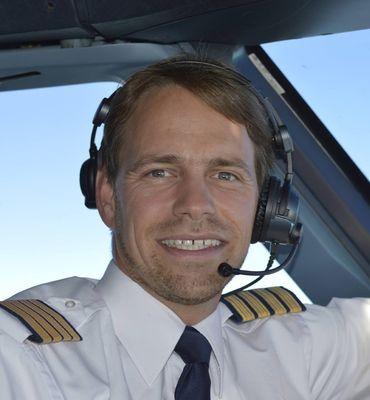
On Wednesday, 7 October, Rudy Pont will deliver the keynote People Don't Come to Work to Do a Bad Job during Safety&Health@Work 2026 at Rotterdam Ahoy. The pilot, safety consultant and lecturer challenges visitors to look at incidents from a different perspective. According to Pont, organisations too often focus on finding someone to blame after an accident, while there is far more to be learned by looking at the wider system behind an event.
"The person closest to the incident is often the first one to receive attention. But that is usually exactly the moment when the real investigation should begin.”
The approach Pont presents during his keynote originates from aviation but, according to him, is equally relevant to sectors such as construction, industry, logistics and infrastructure. After all, people in every sector work within complex systems where procedures, technology and day-to-day operations continuously interact.
Looking at Safety Differently
Pont’s commitment to safety goes beyond his work as an airline pilot. His fascination with the subject began when he became responsible for analysing flight data within an airline and later moved into safety management roles. There, he discovered how complex the reality behind incidents often is.
According to Pont, employees are still too often judged solely on honest mistakes, while organisations could learn much more by understanding why people make certain decisions. His motivation to speak about this topic dates back to a safety event he attended years ago, where he heard the story of a colleague who lost his life in a workplace accident.
That story has never left him. Since then, he has dedicated himself to sharing insights through lectures and keynotes in the hope of preventing accidents, even if it is just one.
At the same time, he sees many organisations facing the same challenge. Significant effort is invested in safety campaigns, incident reporting and behavioural programmes, yet the focus often remains on what goes wrong.
"We count accidents, register incidents and analyse what goes wrong. But by doing that, we are not really measuring how safe we are. We are measuring how unsafe we are.”
Human Error
A key theme of Pont’s keynote is the concept of human error. According to him, the term is still too often used as the final conclusion of an investigation. As a result, an incident appears to be explained, while the real causes often remain hidden.
"Human error is not an explanation.”
In aviation, he encounters this regularly. Following an incident, discussions often focus on whether it was caused by a human or a technical failure. Pont believes that distinction is of limited value. Behind almost every technical failure are human decisions, choices or circumstances somewhere within the system.
Blaming an individual may create a sense of clarity, but it rarely provides meaningful insight. Far more valuable, he argues, is understanding why a particular action or decision made sense to that person at the time.
When organisations understand the factors that influenced a decision, they gain opportunities to improve processes, making them not only safer but often more efficient and effective as well.
Just Culture
During his keynote, Pont will also discuss Just Culture, a concept that is becoming increasingly common within safety management. However, he believes it is still frequently misunderstood.
"I consider myself a Just Culture ambassador, but it is not a free pass.”
According to Pont, Just Culture does not mean people are never held accountable. Rather, it means organisations first seek to understand the information, resources and circumstances available to someone before judging their actions.
He believes this approach should apply to everyone, from frontline workers to senior executives. Looking at incidents in this way creates an environment where people feel safer reporting problems, mistakes and near misses.
According to Pont, that willingness to report and learn is essential for organisations that want to improve.
Safety Impacts Everything
Pont believes that many organisations still view safety primarily as a matter of compliance and regulation.
"Many leaders see safety as something they need in order to operate.”
In doing so, they miss valuable opportunities. Organisations that truly understand how people work and the challenges they face can improve much more than safety alone.
Better quality, greater efficiency, stronger employee engagement and a healthier reporting culture are, in his view, equally important outcomes. Employees are also far more likely to speak up about risks and concerns when they see that their input is genuinely heard and acted upon.
No Simple Answers
During Safety&Health@Work, Pont hopes to encourage visitors to reflect on their own perspective on safety. He does not believe there are simple solutions to complex challenges.
According to him, organisations function as systems in which people, technology, processes and circumstances constantly interact. Anyone seeking to understand an incident must therefore look at the bigger picture.
As he summarises it:
"We need to stop looking for people to blame and start understanding systems.”
Interested in Rudy Pont’s keynote? On Wednesday, 7 October at 10:30, he will take the stage during Safety&Health@Work 2026 at Rotterdam Ahoy. During his session, People Don't Come to Work to Do a Bad Job, he will explain why incidents are rarely the result of a single human error and how organisations can learn to identify the system factors that contribute to accidents and near misses.