

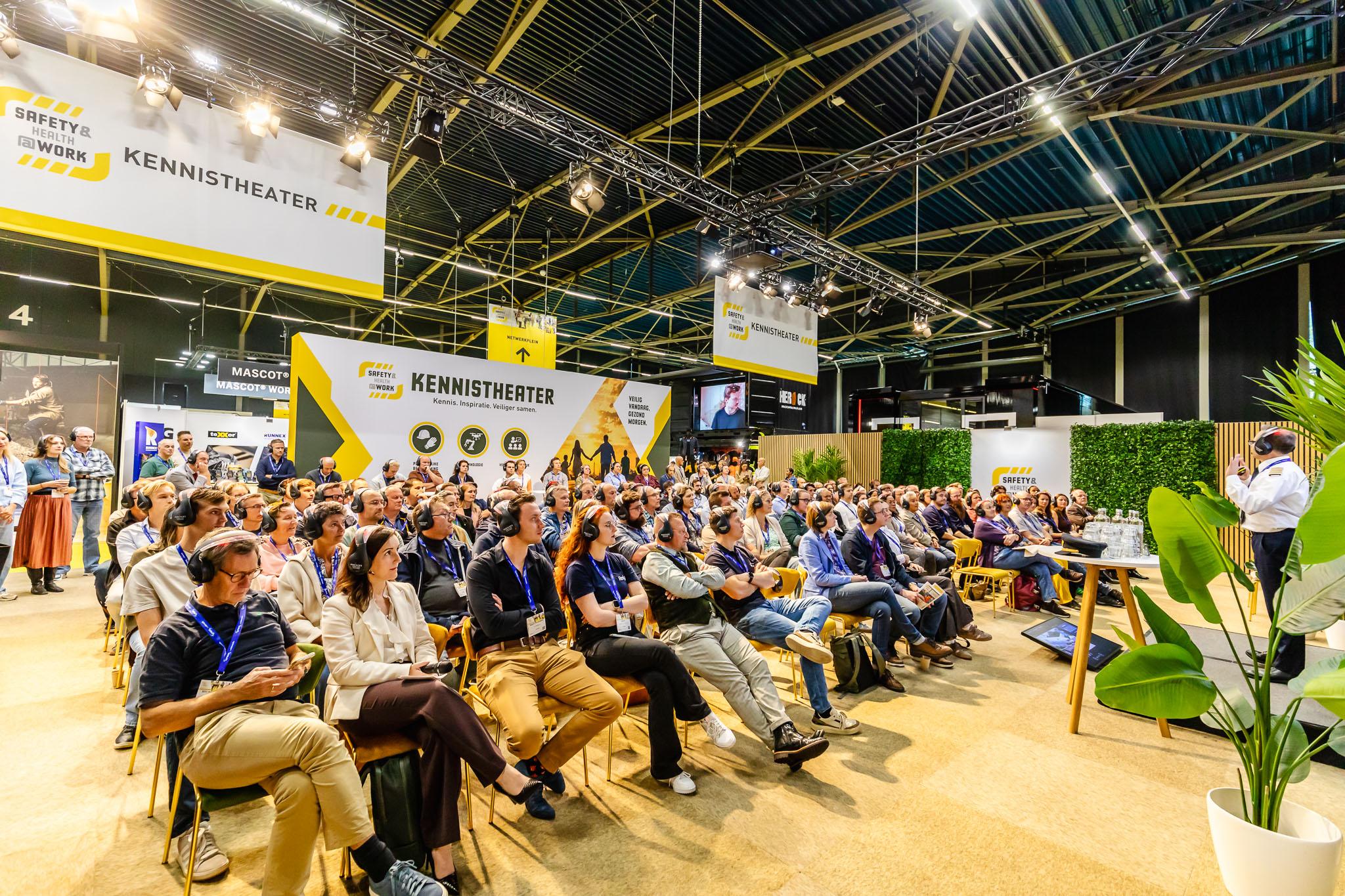
Safety slows things down. Safety costs money. Safety can even get in the way of innovation. Or does it? The first day of Safety&Health@Work mainly showed the opposite. If you want to grow, you need safety. To retain people, to keep production running and ultimately simply to maintain your right to operate. From the cockpit to the construction site, and from the Ministry of Defence to Rotterdam-Rijnmond, safety increasingly comes down to involving people, having the courage to discuss mistakes and, above all, working together.
Pilot Rudy Pont immediately makes it concrete. A company that does not have its safety in order may have ambitious growth plans, but in the end it will never get around to achieving them.
"Safety is a prerequisite for enabling a company to grow. In fact, it is a prerequisite for all your operations.”
Any organisation that repeatedly causes incidents will sooner or later lose its 'license to operate’, he argues. At that point, safety is no longer simply a cost item, but a matter of business economics.
Pont knows what he is talking about. As a pilot, he works in a sector where people literally place their lives in someone else’s hands as soon as the cockpit door closes. "I sometimes compare it with a surgeon. You also trust that person to be properly trained, to know what they are doing and to work safely.” Aviation is particularly interesting because mistakes are not merely recorded, but investigated. Not to identify someone to blame as quickly as possible, but to understand why someone acted the way they did at that particular moment. During his presentation, Pont distilled that approach into a few sharp lessons. People make mistakes. Pointing fingers solves very little. And perhaps the strongest lesson of all: "You don’t live long enough to make all the mistakes yourself.”
That is why organisations need to learn from the experiences of others. But that only works if employees genuinely feel able to report incidents and concerns. If no response follows, that source of information quickly dries up. "If I write three reports and receive no feedback three times, I won’t write the fourth one.”
People save the day more often than the data suggests
At the same time, Pont questioned society’s almost automatic faith in technology. Of course, humans and technology work together. In aviation, they have done so for decades. But with the rapid rise of artificial intelligence, something fundamental is changing: who will be responsible when systems become increasingly autonomous?
"We often see technology as the ultimate solution,” Pont warned.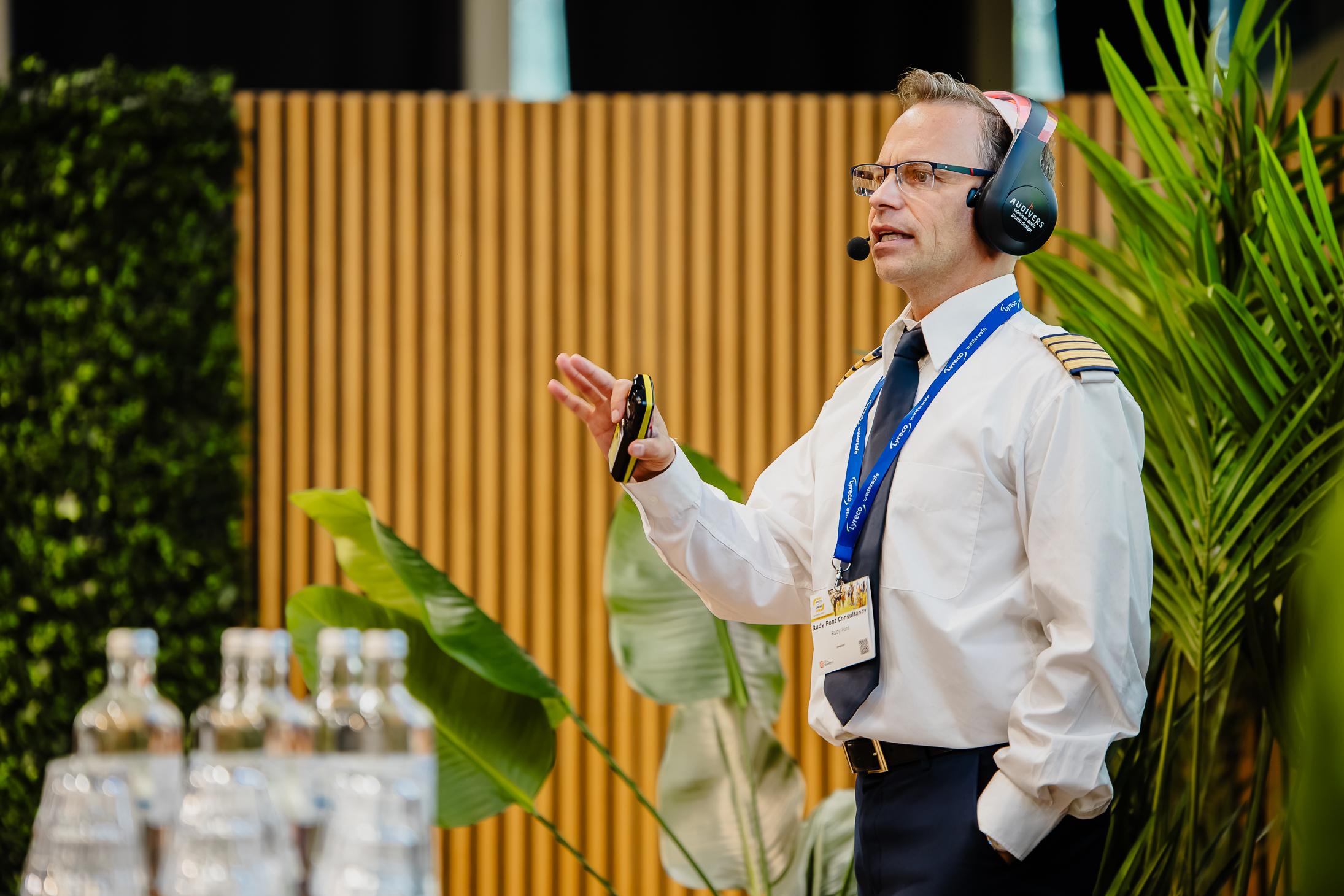
Pilots can sometimes find themselves in a curious Catch-22. If they switch off the autopilot during an incident, the question afterwards may be why they did so. If they leave it switched on and something goes wrong because of the automation, the question becomes why they failed to intervene.
There is another issue as well. Human errors show up neatly in the statistics. The moments when people prevent an incident through experience, intuition or quick action are much harder to measure. "If we save the day and make sure there is no accident, near miss or incident, we usually have no data about that.” Pont therefore argues that we need to understand the human contribution much better "before we simply hand over the torch to technology”.
Perhaps that also explains the appeal of a trade show such as Safety&Health@Work. "There is no competition in safety,” Pont said. Companies may be commercial competitors, but safety professionals ultimately want the same thing: "That everyone goes home safely at the end of the day.”
A brilliant robot no one wants to work with
Arjan Walinga also refused to put technology on a pedestal. His example was a robot designed to take physically demanding work away from floor layers. On paper, it sounded ideal. In practice, less so. The machine turned out to be heavy, difficult to carry upstairs, and floor layers did not automatically see the added value. According to Walinga, the problem often does not lie in the original idea, but in what happens afterwards. "People need to be shown what the benefits are for them. And let’s be honest: they also have something to say about it, because it is their work.”
In fact, the people who perform the work every day often know exactly why an innovation will or will not work. A device that looks fantastic on the drawing board but turns out to be impractical on the construction site is simply not fully developed yet. Walinga put it with a smile: "The gallery of failed good examples is endless. And it is gathering dust.”
According to him, there is a serious innovation challenge underneath that. The Netherlands is good at prototypes and pilots, but there is still a significant gap between a promising idea and a robust, maintainable machine that construction companies genuinely trust enough to use.
Even so, Walinga sees a direct connection here with the event theme 'Growth through Safety’. Younger workers increasingly see safe working conditions as a given. They want to do their jobs well, but they also want to go home healthy. "If you want to keep attracting young people in the long term, you have to invest in that. Otherwise, you simply won’t attract them anymore.”
At Defence, sometimes you have to stop in order to move forward
That safe working does not always mean eliminating all risks became clear during the presentation by Mohan Verstegen and Colonel Renzo Versteeg of the Ministry of Defence. Their presentation had a telling title: Health and Safety at Defence: a story of stopping AND moving forward.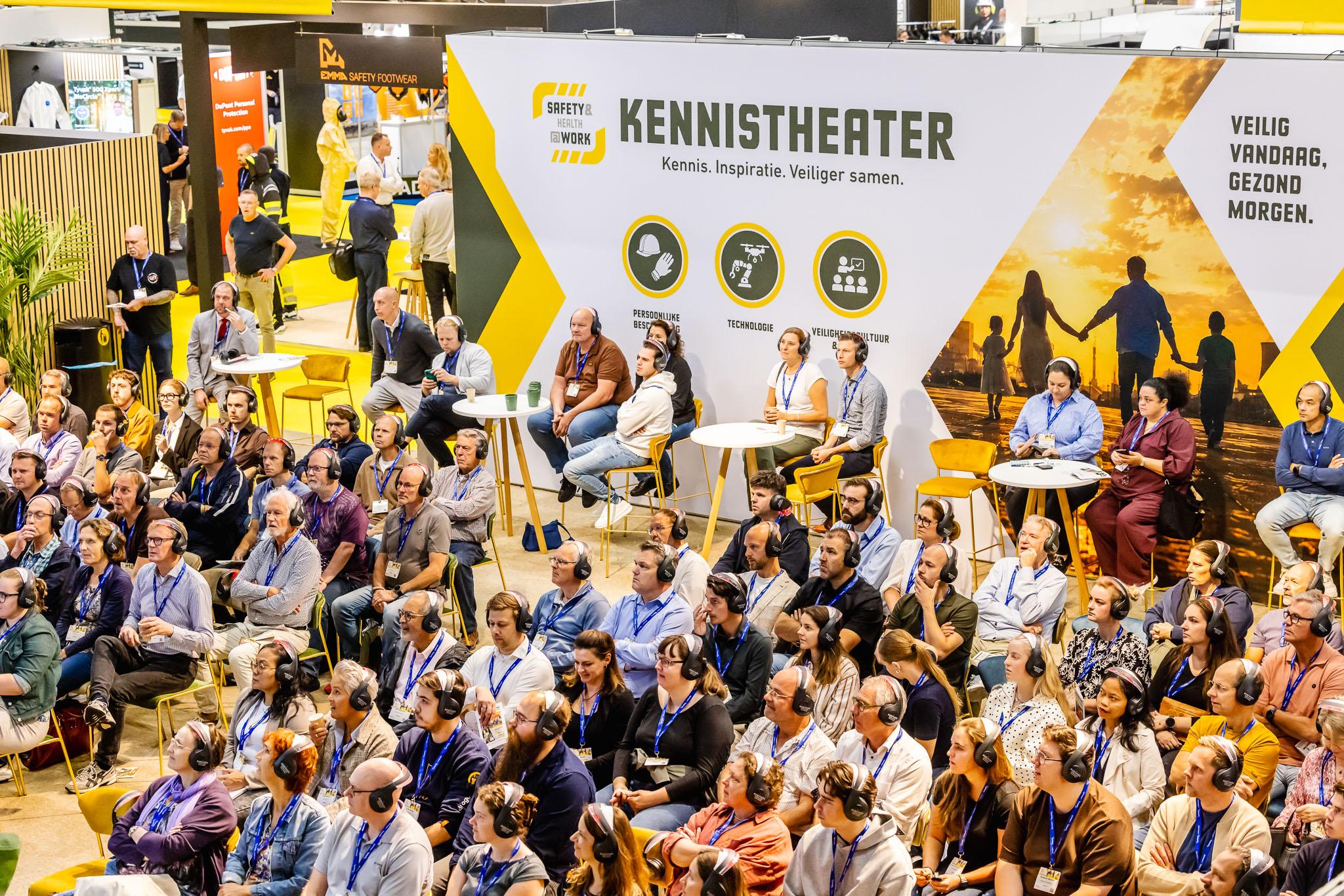
Defence has a unique position. The organisation has to keep the Netherlands resilient, while at the same time protecting its own people. "We make sure our people are deployable and can do their jobs properly, so that they themselves also — simply put — stay in one piece,” Versteeg said.
That requires both physical and social safety, leadership and a culture in which people recognise risks and feel able to discuss them. But it also requires collaboration beyond the organisation itself. According to Versteeg, society increasingly looks to Defence when it comes to resilience. At the same time, Defence can learn a great deal from companies and knowledge institutions. A walk around the exhibition immediately gave him a practical example. Heat-related illness is a serious risk for military personnel. At the event, he came across a supplier of cooling vests. A conversation started, knowledge was exchanged. "They get new ideas, we get new ideas. It simply works really well.”
From self-reliance to collective resilience
Collaboration was also at the heart of the story told by Edith van der Reijden, Director of Risk and Crisis Management at the Rotterdam-Rijnmond Safety Region. Anyone who thinks resilience mainly means that everyone must be able to take care of themselves is, according to her, already behind the times.
"We used to always talk about self-reliance. Nowadays, we talk about collective resilience. Because you can’t do it alone.”
Take care of yourself first, of course. But after that, look around you. What can a neighbour, company, government body or another organisation contribute? In her own words, deliberately kept simple: "If one person has bread, another has water and another has eggs, you almost have a pancake.” That collective resilience is becoming increasingly important as crises become more complex, longer lasting and less predictable. Companies therefore need to think not only about incident response, but also about continuity, dependencies and the question of who they need when processes are disrupted for an extended period. In Rotterdam-Rijnmond, that is anything but a theoretical discussion. With a high concentration of logistics, industrial and chemical companies, organisations are highly dependent on one another.
That is why Van der Reijden also sees value in a regional trade show. Not only because of the products on display, but especially because it brings people together. "You see that people know and recognise one another, but also that they have conversations they would normally never have. And that simply makes us stronger when it comes to safety.”
That made the common thread of the first day of Safety&Health@Work surprisingly simple. Safety does not automatically improve through more rules, more technology or another additional protocol. It grows when people learn from one another, when innovation reflects real-world practice and when organisations know how to find each other before something goes wrong.